Pre-Quote Recommendations · Tier 0

Veracloud Office Coffee Infrastructure

Three viable directions to move from a managed-service coffee model to an owned-asset model — presented at indicative pricing, with the analysis behind each, so direction can be set before supplier quotes are pursued.

Prepared by
Brewprint
Engagement
Veracloud Setup (Tier 0)
Status
Indicative ballpark
Date
17 May 2026
Why this investment matters

On the importance of coffee — a short preface

Coffee in a workplace is rarely just coffee. It is fuel for the work itself — a chemical shift that helps people focus through the harder hours of the morning and the slower hours of the afternoon. It is social lubricant — the small ritual around which colleagues end up talking, sometimes about work and often not, in ways that no scheduled meeting can quite replicate. It is hospitality — what the office offers a visitor as a quiet signal that they are welcome. It is, at its best, a daily moment of small surprise: a drink that is genuinely good, made with care, that interrupts the routine briefly and pleasantly.

The decision in front of Veracloud is therefore not "which appliance should we buy." It is what kind of daily coffee moment the office wants to design for its team — and at what level of investment, against what alternative, with what trade-offs. The analysis that follows is in service of that decision, not the other way around.

Executive Summary

Three options. Three philosophies. One direction to set.

Veracloud is moving from a managed-service coffee model (MultiVend, ~€1,800/yr) to an owned-asset model. The three options span €1,900–€3,000 in upfront CapEx. Steady-state operating costs depend on bean choice; for the prosumer options they also depend on optional operational optimisations.
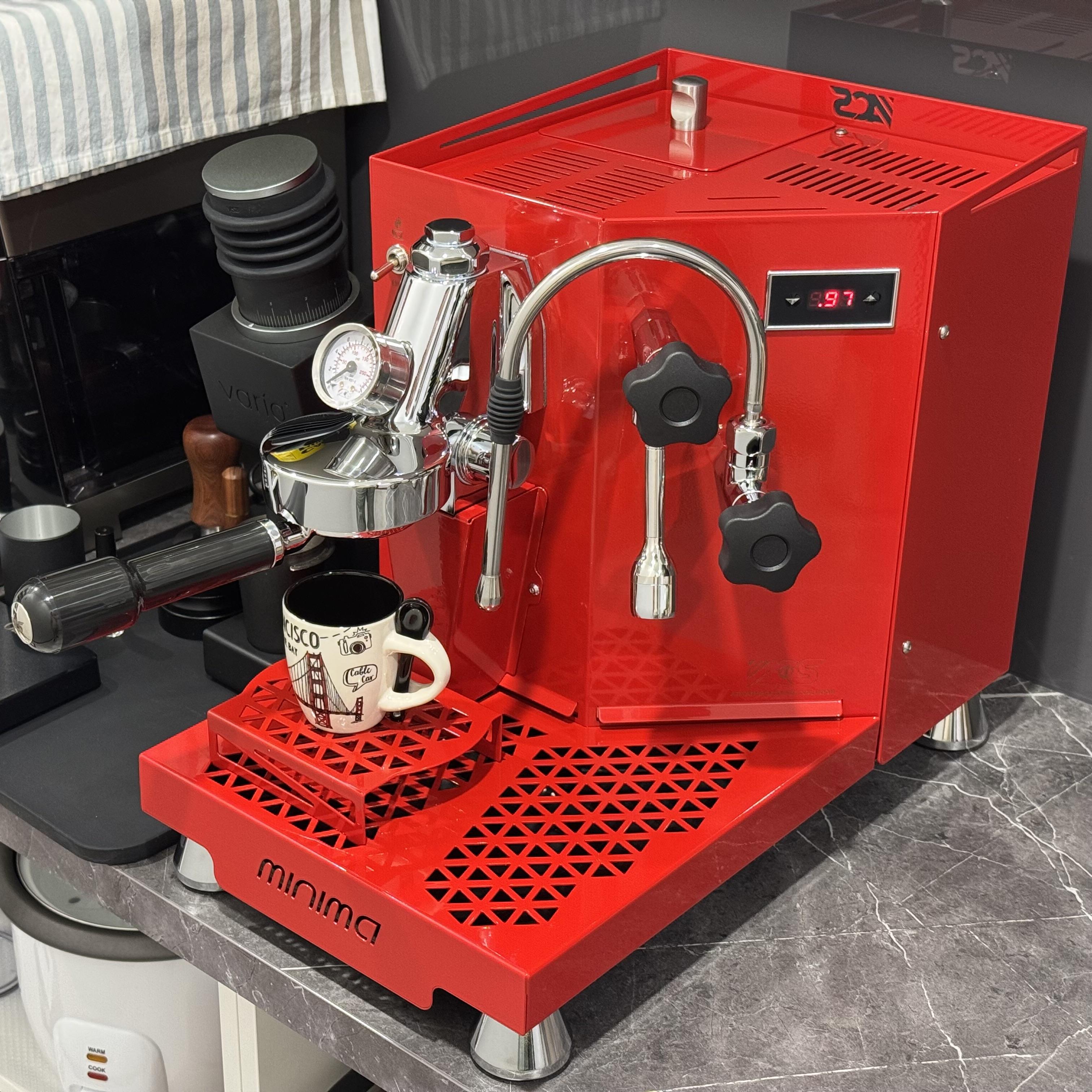
ACS Minima espresso machine
Option A · Value Prosumer

ACS Minima

Compact dual-boiler prosumer espresso machine with the same fundamental architecture as much more expensive machines.

~€1,900
Indicative CapEx
5-yr TCO (specialty beans):
€13,750 – €17,362
ACS Vesuvius V10 espresso machine
Option B · Premium Prosumer

ACS Vesuvius V10

ACS's flagship prosumer machine with 7-stage pressure profiling and a touchscreen interface. A visual showpiece.

~€3,000
Indicative CapEx
5-yr TCO (specialty beans):
€14,900 – €18,512
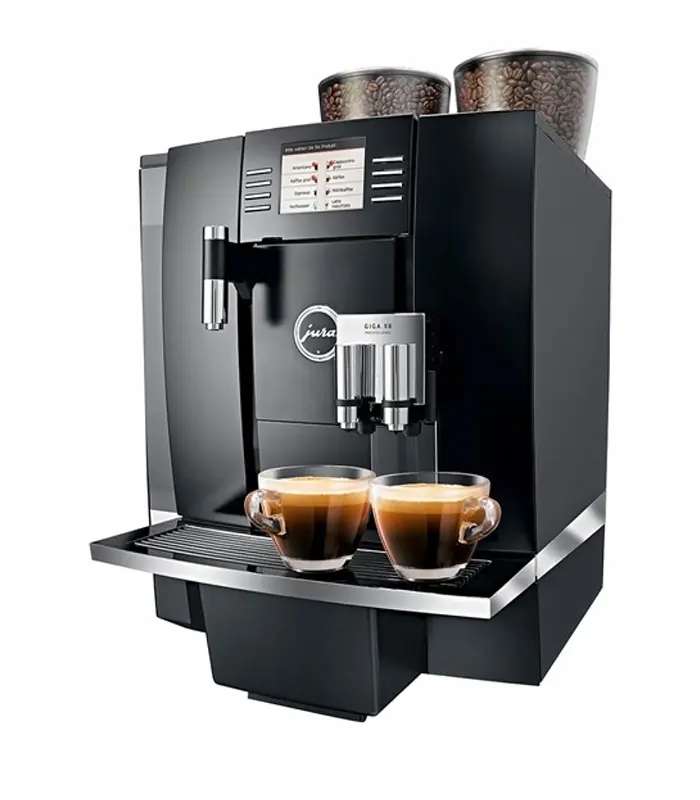
Jura X8 Professional bean-to-cup machine
Option C · Commercial Super-Auto

Jura X8 Professional

Commercial-tier bean-to-cup machine. Push-button operation, 80-second cappuccino, no training required.

~€3,000
Indicative CapEx
5-yr TCO (specialty beans):
~€17,200
The Ask

Which philosophy resonates, and is the CapEx envelope shown here in the right band? Once a direction is confirmed, formal supplier quotes will be pursued and a fully validated recommendation will follow.

Note on figures

All numbers are educated indications drawn from current public retail data and one verbal pricing offer from ACS (€2,200 on the V10, formal quote in progress). No formal quotes have been obtained. This is deliberate — the next step is contingent on Veracloud's direction.

*Specialty beans priced at €22/kg (cafe/retail rate). Stage 5 supplier engagement will pursue wholesale pricing, likely landing closer to €15–€18/kg. Specialty coffee is simply coffee where beans have been assessed for deformities.
How to Read This Document

The five factors that determine coffee quality

Hardware is one of five factors, and the order of consequence is not what most non-specialists assume. The grinder is more important than the espresso machine. Beans dwarf both.

1
The beans themselves Beans set the ceiling. No machine, operator, or grinder can produce better coffee than the beans allow.
Highest impact
2
The grinder Determines how much of the bean's ceiling is reachable. The single most consequential piece of hardware.
Very high impact
3
Execution The operator's skill in dosing, distributing, tamping, and pulling determines drink-to-drink consistency.
High impact
4
The espresso machine Shapes the brewing experience, but operates within the upper bound that beans and grinder have already set.
Moderate impact
5
Equipment cleanliness Cleanliness protects all of the above. Neglect it long enough and everything underperforms.
Foundational
Why this matters for the budget

A €500 grinder paired with a €1,100 espresso machine will produce better coffee than a €3,000 machine paired with a €100 grinder. There is a well-worn analogy in the coffee community that captures this: a great espresso machine with an inferior grinder is "like taking a Ferrari off-road."

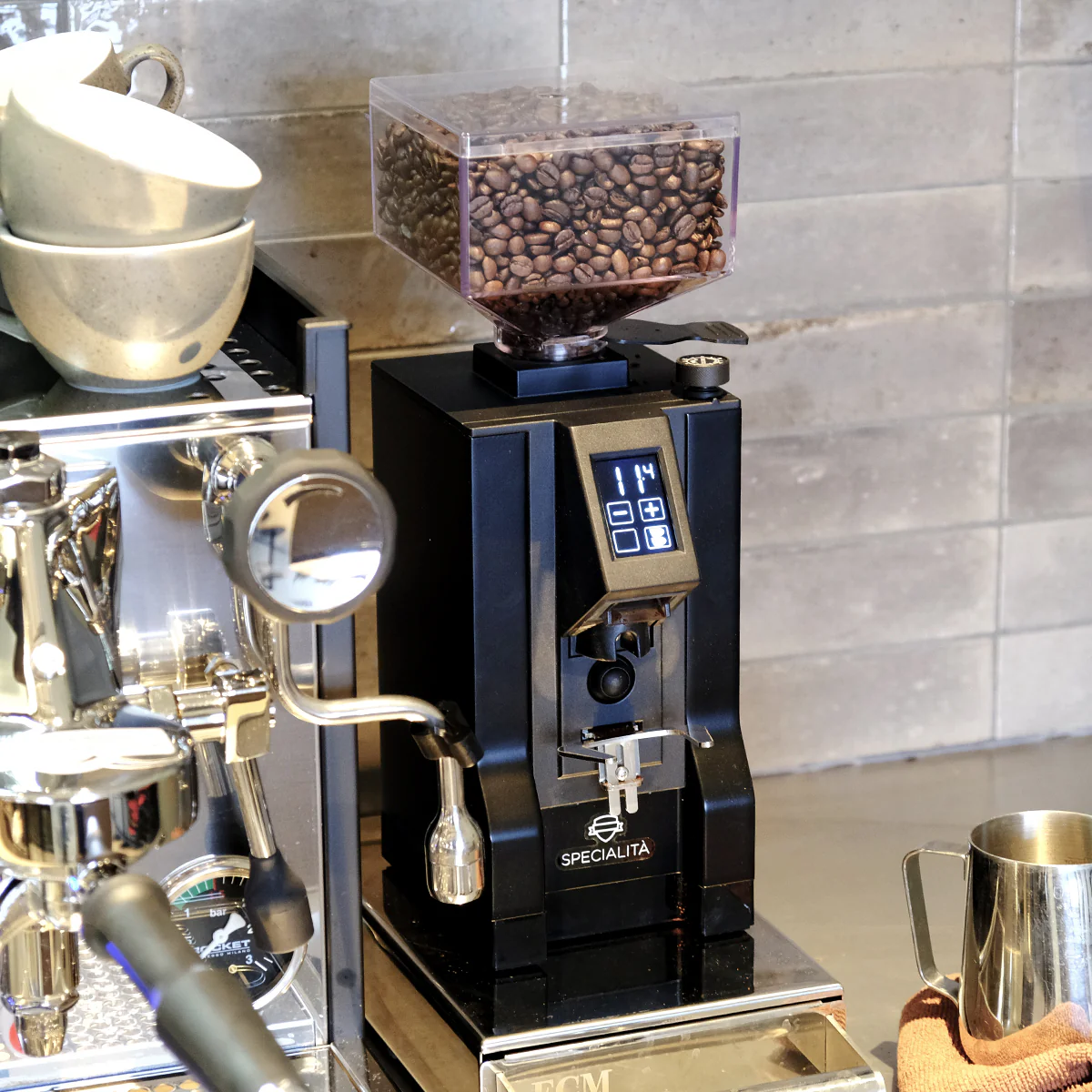
Eureka Mignon Specialita grinder
The most important piece of hardware

Eureka Mignon Specialita

This is why the same Eureka Mignon Specialita grinder (~€500) appears across both prosumer options. Compromising on the grinder to save €200–€300 would undermine the entire investment regardless of which espresso machine sits above it.

Hopper-fed timed-dose design — chosen specifically for multi-user office operation. No weighing required.

The Jura X8 has an integrated ceramic burr grinder as part of its sealed bean-to-cup architecture. It is competent — meaningfully better than the Necta's — but it is not in the same category as a dedicated Eureka. This is one of the genuine trade-offs in Option C and is worth surfacing honestly.

One more thing. Bean choice is deferred to the next phase of the engagement, but it is the single largest quality lever that will be pulled on this project. The hardware decision determines the upper bound of what Veracloud can extract; the bean decision determines where on that bound the daily cup actually lands.

Credentials

Calvin in Coffee

Brief context on the advice being given. The framework, options, and analyses presented here are not generic — they are calibrated to Veracloud specifically.

Home barista of four years

Daily brewing across espresso (Flair 58 manual lever), V60, AeroPress, and moka-pot methods.

ITS-qualified barista

Formal training in espresso preparation, extraction theory, and milk technique.

Setup advisor

Informally engaged on equipment selection and workflow design for peers across commercial and domestic contexts.

Active reviewer

Of coffee establishments across Malta and abroad — the basis of the developed palate behind this analysis.

Context & Constraints

What we're optimising for

Current setup

MultiVend operates a Necta super-automatic vending machine at ~€0.60/drink (all-inclusive). Total cost ~€1,800/year at ~30 drinks/day. Beans are vending-grade Robusta (Miscela d'Oro "Intenso") — competently dispensed but quality-limited by design.

Strategic intent

Exit the managed-service model in favour of an owned asset (CapEx, not OpEx). Regain control over bean choice and quality. Treat coffee as part of the office experience the company invests in directly rather than outsources.

Team profile

  • 13 expected full-time staff (4 hybrid remote)
  • ~30 drinks/day, sporadic distribution
  • ~50% espresso-based, ~50% milk drinks
  • Mixed coffee literacy: 2 enthusiasts + others
  • Mechanically capable engineering team

Physical environment

  • Kitchenette, staff-only
  • EcoPure bottle-fed water dispenser in place
  • Standard 13A electrical
  • No acoustic or hygiene constraints
One option formally rejected: Capsule systems

Nespresso Professional, Lavazza Blue, similar. Three reasons: (1) John's explicit preference rules out pod-based systems; (2) per-drink OpEx at €0.35–€0.45 per capsule is structurally worse than the current MultiVend baseline; (3) capsule systems recreate the single-supplier lock-in dynamic that the CapEx-conversion is intended to escape.

Comparing Like-for-Like

The two operational variables behind the numbers

The MultiVend baseline (€1,800/yr) is an all-inclusive figure: hardware lease, beans, milk, maintenance, supplier margin. To compare honestly, this document presents the complete operational economics of each owned option, including bean and milk costs that MultiVend currently absorbs invisibly.

Prosumer bean consumption

The ACS prosumer options use the industry-standard 58mm portafilter, pulling an 18g "double shot" per extraction. A single 18g pull yields enough espresso for two drinks.

Bean consumption depends on the pairing rate — what fraction of drinks share a pull. At Veracloud's reality, a realistic 50% pairing rate produces an effective dose of ~13.5g per drink.

The Jura X8 operates at a fixed proprietary ~11g dose with no pairing benefit.

Optional low-dose basket (ACS only)

Specialty 58mm baskets from Pesado, IMS, 9Barista or similar (~€100 one-off) can reduce per-pull dose from 18g to 12g while maintaining proper extraction geometry.

At 50% pairing this brings effective dose to ~9g per drink. A real specialty-coffee optimisation used widely by third-wave cafes, offered as available upside rather than a necessary lever.

The Three Options

Detailed analysis

ACS Minima
Option A
ACS Minima
ACS Vesuvius V10
Option B
ACS Vesuvius V10
Jura X8 Professional
Option C
Jura X8 Professional
ACS Minima dual-boiler espresso machine
Eureka Mignon grinder
+ Eureka grinder

Option A — ACS Minima

Prosumer, value-tier
Indicative CapEx
~€1,900
machine ~€1,100 + grinder ~€500 + training ~€300

A compact dual-boiler prosumer espresso machine from ACS, an Italian manufacturer Brewprint has an active relationship with. Genuine cafe-grade hardware: stainless steel boilers, E61 commercial grouphead, PID temperature control on both boilers, 58mm portafilters (industry standard). Paired with a Eureka Mignon Specialita grinder.

A note on the grinder choice: the Eureka Mignon Specialita is selected specifically for multi-user office operation. Alternatives at the same price point (notably the Niche Zero) use a single-dose workflow where each user must weigh out their beans before grinding — workable for one home user but introduces friction in a 13-person office. The Eureka uses a hopper-fed timed-dose design — place the portafilter, press the button, walk away.

Best at

Quality coffee at the lowest credible prosumer entry point. Same fundamental architecture as much more expensive machines, without the pressure-profiling complexity of the V10.

Trade-offs

Manual operation throughout — grind, dose, tamp, pull, steam milk. ~3-minute cappuccino time by a trained operator. The full team is trained as part of the engagement. The skills are genuinely learnable.

Who this suits

Veracloud, if the team values quality coffee as a daily upgrade over MultiVend, sees the training as a worthwhile cultural investment, and is comfortable with a learning curve in the first few weeks.

ACS Vesuvius V10 flagship prosumer espresso machine
Eureka Mignon grinder
+ Eureka grinder

Option B — ACS Vesuvius V10

Prosumer, premium-tier
Indicative CapEx
~€3,000
machine €2,200 verbal offer + grinder ~€500 + training ~€300

ACS's flagship prosumer machine. Same dual-boiler architecture as the Minima, with two material additions: (1) pressure profiling capability — the user can program the brew pressure curve across 7 stages, simulating the behaviour of a manual lever machine and unlocking flavour clarity in lighter-roast specialty coffees; (2) larger touchscreen interface with five stored brew profiles and a multi-programmable daily timer.

Beyond function, the V10 is also genuinely a visual showpiece in a way the Minima is not. Larger chassis, polished stainless presentation, prominent touchscreen, integrated lever-pull controls — a piece of equipment that signals investment and craft when seen on the counter.

Best at

Reaching the genuine quality ceiling of espresso extraction. Pressure profiling is the difference between "very good espresso" and "competition-grade extraction" in skilled hands. Suited to developing single-origin work.

Trade-offs

Same manual workflow as the Minima. The pressure-profiling capability only earns its premium if it is genuinely used; for routine office cappuccinos it offers no advantage over the Minima.

Who this suits

Veracloud, if the team has appetite to develop espresso skill seriously over time, if coffee is positioned as a cultural investment with progressive depth, and the visual presence is part of the value proposition.

Jura X8 Professional commercial bean-to-cup machine

Option C — Jura X8 Professional

Commercial super-auto bean-to-cup
Indicative CapEx
~€3,000
machine, fully integrated — no separate grinder or training

A genuine commercial-tier super-automatic bean-to-cup machine, rated for 80 cups/day by the manufacturer — Veracloud will use approximately 37% of its rated capacity, comfortable headroom for an 8–12-year working life. Integrated ceramic burr grinder, automated dose/tamp/extract, height-adjustable dual spout with fine-foam milk technology. 21 programmable specialities including cappuccino, latte, flat white, macchiato. Lockable bean hopper and water tank suitable for shared office environments.

Best at

Operational efficiency. End-to-end cappuccino time is ~80 seconds, push-button, no training, no named operator. Anyone in the office can produce a consistent drink at any time. Auto-rinse cycles handle most daily hygiene.

Trade-offs

Quality ceiling is capped — good coffee but not the body, crema, or microfoam of a properly operated prosumer. Shorter longevity (8–12 yrs vs 15–20+ for E61). Repair typically requires a Jura technician.

Who this suits

Veracloud, if the team prioritises consistent push-button output across all users, values staff-time efficiency, and treats coffee as an essential office utility rather than a developing craft.

Training

A cost-and-culture investment

The €300 training line in Options A and B is best understood as a single budget item delivering two distinct outcomes.

The operational outcome

A coffee-expert-led session — delivered by Little Chief Roasters & Specialty Coffee Shop — gives the team the practical foundations: grind dialling, dose consistency, tamp technique, shot evaluation, milk steaming. By the end, every attendee can produce a credible cappuccino unsupervised.

The cultural outcome

The same session naturally functions as a team-building activity — a structured non-work experience where staff learn something new together and end the afternoon with drinks they made themselves. For an office of 13, a genuine cohesion moment.

Cost-reduction lever: train-the-trainer

Rather than train all 13 in one session, train a smaller group (Calvin, André + 2–3 others) and have them peer-train the rest. Potentially halves external training cost while building durable in-house capability. Calvin will personally provide the peer-led component.

Day-to-day knowledge transfer

Calvin will be present in the office daily and will happily teach colleagues informally as they brew alongside him. André will do the same. Normal office behaviour for coffee enthusiasts — the formal training is a foundation, not a one-off requirement that has to deliver complete mastery.

The Jura X8 does not require training and therefore does not include this line item. This is a real Option C advantage — but it is also a missed opportunity for the team-building dimension that the training session naturally provides.

Comparison Summary

Side by side across criteria

Criterion Option A — Minima Option B — V10 Option C — Jura X8
Indicative CapEx~€1,900~€3,000~€3,000
Cappuccino brew time~3 min~3 min~80 sec
Espresso brew time~90 sec~90 sec~30 sec
Required operator skillTrained (full team)Trained (full team)None
Quality ceilingHighVery HighCapped — good but not specialty-grade
Drink varietyFull barista rangeFull barista range21 programmed specialities
Dose configurabilityYes — 12g–18gYes — 12g–18g + pressure profilesNo — fixed ~11g
Daily cleaning burdenDrip tray, wand, knock boxSame as MinimaAuto-rinse + drip tray + grounds drawer
Maintenance products / yr~€100~€100~€220
Expected working life15–20+ yrs (E61)15–20+ yrs (E61)8–12 yrs (brew unit cycle)
RepairabilityHigh — standard parts, in-houseHigh — standard parts, in-houseSpecialist service likely
5-Year Total Cost of Ownership

How the numbers actually move

The TCO comparison is sensitive to two variables Veracloud will choose: bean quality tier, and — for prosumer options only — whether the optional low-dose basket optimisation is adopted. All scenarios assume the realistic 50% pairing rate for ACS options.

5-Year Total Cost — All Scenarios

Comparing each option across three bean/configuration scenarios against the MultiVend baseline.

Scenario 1 — Specialty beans (~€22/kg @ cafe retail), standard configuration

Cafe-tier wholesale not yet negotiated. Standard 18g portafilter dose with 50% pairing assumed.

OptionCapEx5-Year OpEx5-Year Total
A — ACS Minima€1,900€15,462€17,362
B — ACS Vesuvius V10€3,000€15,512€18,512
C — Jura X8€3,000€14,200€17,200
MultiVend baseline (as-is)€0€9,000€9,000

Scenario 2 — Specialty beans + low-dose basket optimisation (ACS only)

€100 one-off addition to the prosumer options. Brings effective dose to ~9g per drink.

OptionCapEx5-Year OpEx5-Year Total
A — ACS Minima (+ €100 low-dose kit)€2,000€11,750€13,750
B — ACS Vesuvius V10 (+ €100 low-dose kit)€3,100€11,800€14,900
C — Jura X8 (fixed ~11g dose)€3,000€14,200€17,200
MultiVend baseline€0€9,000€9,000

Scenario 3 — Lavazza supermarket-grade beans (~€12/kg, like-for-like with MultiVend)

Match-quality scenario. Shows how the owned-asset options compare on equal coffee-quality footing.

OptionCapEx5-Year OpEx5-Year Total
A — ACS Minima€1,900€10,400€12,300
B — ACS Vesuvius V10€3,000€10,450€13,450
C — Jura X8€3,000€10,075€13,075
MultiVend baseline€0€9,000€9,000

Reading the TCO

1. The Minima is the cheapest 5-year option

In two of the three scenarios — and within €162 of the Jura X8 in the third. Once double-shot pairing is properly modelled, the "Jura is dramatically cheaper to run" reading does not survive.

2. Low-dose basket is upside, not a requirement

Veracloud does not need to commit to specialty-coffee operational discipline for the prosumer options to be economically competitive — they already are. ~€3,600 additional saving over 5 years if the team grows into it.

3. Bean choice dwarfs hardware

The delta between specialty cafe-price beans (~€22/kg) and supermarket-grade (~€12/kg) is ~€5,000 over 5 years. Wholesale negotiation in Stage 5 will move that figure meaningfully.

The MultiVend Baseline — A Reframe

What MultiVend's price actually buys

A straight comparison against the €9,000 baseline shows any owned-asset option as more expensive over 5 years. This comparison is structurally misleading, because MultiVend and the proposed options are not the same product.

MultiVend's €0.60-per-drink price is overwhelmingly service margin, not coffee cost. The raw wholesale cost of the Robusta vending blend is approximately €5–€8/kg — meaning the actual coffee in each drink costs MultiVend ~€0.06–€0.10. The remaining ~€0.50 covers machine lease, technician visits, refills, parts, and supplier margin.

By moving to owned hardware, Veracloud captures that service-margin spend and redirects it. The question is no longer "can we beat MultiVend's price?" but "where do we want the service-margin money to go — into bean quality, into a better machine, or into pocket?"

The honest options

1

Match MultiVend's quality with owned hardware

Lavazza supermarket-grade beans, +€3–€4k over the baseline across 5 years, plus a permanent asset on the balance sheet.

2

Materially upgrade quality

Specialty beans at cafe-price reference, +€5–€10k over 5 years depending on hardware and low-dose optimisation. The asset, and noticeably better coffee — with the gap narrowing further under Stage 5 wholesale.

3

Stay with MultiVend

€9,000 over 5 years, no asset, no quality control, but predictable and externally managed.

None is wrong. The choice depends on what coffee is for at Veracloud — a basic office utility, or a deliberate investment in the daily team experience.

Brew Time, Culture & Productivity

Brew time matters — but not the way procurement frameworks suggest

It matters as a convenience signal for the user planning their next 5 minutes — "do I have time before my 11am call?" — not as a productivity cost to be capitalised against staff salaries.

Espresso
Options A & B
~90 sec
Option C (Jura)
~30 sec
Necta (current)
~25 sec
Cappuccino
Options A & B
~3 min
Option C (Jura)
~80 sec
Necta (current)
~50 sec

Read this practically. On Options A or B, a quick espresso between meetings is comfortably feasible; a cappuccino is feasible if there are 3–4 minutes available. On Option C, both fit comfortably within a 90-second window. This is genuinely useful information for the team's daily rhythm — particularly for team members whose schedules are heavily back-to-back.

Documented precedent · The HP Way

Time at the coffee station is not lost time.

Veracloud operates as a knowledge-work firm — IT services and consultancy, staffed by engineers, working on complex client problems. In this kind of organisation, the time staff spend at the coffee station is not equivalent to lost productive output. It is structured informal exchange.

According to the official HP Company Archives, twice-daily coffee breaks were a deliberate ritual at HP facilities — attended by employees at every level including Bill Hewlett and Dave Packard themselves. The breaks "fostered socialization and community spirit throughout the company" and "facilitated creative thinking by giving people the chance to exchange ideas and problems outside of company-directed channels."

Longtime HP engineer John Minck wrote that the coffee-break culture afforded "a lot of cross-fertilization" because "people did not hold their research protectively." Jim Collins drew heavily on HP's archives in researching Built to Last precisely because these small daily rituals were a significant part of what made HP one of the most enduringly successful firms in American business history.

The implication for Veracloud is direct. A coffee setup that draws people away from their screens for a few minutes twice a day, that produces a drink worth gathering around, that creates the kind of "what are you working on?" exchange that no manager could schedule — that is not a productivity cost. It is the same infrastructure investment HP and many other knowledge-work firms have made deliberately for decades.

This does not pre-pick Option A, B, or C. Each creates a legitimate version of the coffee-station moment. The Jura X8's 80-second cappuccino is a quick punctuation in the day; the ACS prosumer's 3-minute cappuccino is a longer one. Both can serve the same function. The choice is about what kind of moment Veracloud wants to design into the working day, not about minimising the time spent in it.

Where the Three Options Diverge

Three coherent philosophies of office coffee

The right choice is the one that matches Veracloud's actual values. None is better or worse — they are different answers to a question only Veracloud can answer.

A

The Pragmatic Craft Entry

Buy quality at the lowest credible entry point. Train the whole team on a learnable skill, with Calvin and André as enthusiastic daily users and informal coaches. Accept the slightly longer brew time as part of the cultural value. Get a machine that will still be working in twenty years and is repairable in-house. Lowest 5-year TCO in two of three scenarios.

B

The Long-Term Coffee Investment

Go beyond entry-level into pressure-profiling territory. Position coffee as a developing craft within the office, with a visually distinctive machine that signals the investment. Accept the V10 premium as the cost of unlocking the upper quality ceiling. Best suited to an office that intends to engage with single-origin specialty coffee seriously over time.

C

The Operational Utility

Treat coffee as an office utility that should produce consistent quality with zero training overhead. Anyone in the office can produce a competent cappuccino in 80 seconds — useful for back-to-back schedules and for guest service. Accept a lower quality ceiling and shorter hardware lifespan as the cost of operational simplicity.

Conclusion

Direction-Ask

This document deliberately does not pre-pick a winner. Each option is a legitimate, defensible direction for Veracloud's profile, and the right answer depends on which philosophy resonates more strongly. Brewprint can build a compelling, well-evidenced recommendation around any of the three — but it would be unfair to pre-empt that decision.

The ask

  1. Which of the three options (A, B, or C) feels closest to the right philosophy for Veracloud? Or is the right answer "go and get hard quotes on two of these and we'll decide then"?
  2. Is the CapEx envelope shown here (~€1,900–€3,000) in the right band, too high, or too low for Veracloud's appetite?
  3. Is there appetite for the team training session (~€300 one-off) as part of the engagement, including as a team-building experience? Should the train-the-trainer cost-reduction approach be explored?
Next Steps

What comes after direction is set

None of these requires Veracloud action before John provides direction. Listed here as a guide of what comes next.

1

Feedback & Re-calibration

  • John shares initial feedback, change requests, and further guidance
  • Calvin makes the necessary adjustments and re-presents the recommendations
2

Supplier Engagement & Formal Quotations

  • ACS for the chosen prosumer machine (V10 quote already in progress; Minima quote to follow)
  • Eureka or alternative distributor for the Mignon Specialita grinder
  • Coffee Circus, Coffee Cherry, and Lot 61 for specialty bean wholesale pricing
  • Little Chief Roasters & Specialty Coffee Shop for negotiated training
3

Operational Verification

  • MultiVend drink-count verification — firm up the 30 drinks/day assumption
  • Plumbing & water-feed feasibility with the Nubis Centre
  • Counter layout measurement and target layout sketch
4

Transition Planning

  • MultiVend exit logistics — notice period, collection, transition timing
  • Bean trial period — sample-tastings from 2–3 candidate roasters over 2–3 weeks
5

Internal Veracloud Actions (post-direction)

  • Asset register entry for the chosen hardware with appropriate depreciation schedule
  • Maintenance protocol document — written SOP for daily, weekly, and quarterly tasks
Closing Notes

A note on the working figures

No supplier outreach has been undertaken beyond an informal pricing offer from ACS for the V10 (€2,200, formal quote pending). This is deliberate — the next step is contingent on Veracloud's direction, not the other way around.

All figures in this document are indicative. Bean pricing in particular reflects cafe/retail tier and is expected to improve materially under Stage 5 wholesale negotiation. The TCO ranges shown are conservative working estimates; the validated figures in the final Strategic Coffee Infrastructure Plan will likely be better than those presented here.